What a Veterinary Employee Recognition Program Looks Like
September 2, 2026 · 4 min read
An employee recognition program in a veterinary practice is a defined, repeating system, not a budget line: it names who gives recognition, how often, for what specifically, in what form, and how the practice knows whether any of it is happening. That last piece is what separates a program from a habit of good intentions, and it is where most practices stop.
Gallup and Workhuman tracked the careers of nearly 3,500 employees from 2022 to 2024 and found that well-recognized employees were 45% less likely to have changed organizations two years later. The same research found just 22% of employees say they get the right amount of recognition for the work they do, a figure that had not budged since 2022.
What Turnover Actually Costs When Recognition Fails
Gallup also found that 51% of all U.S. employees were watching for or actively seeking a new job as of May 2024, and every one of those departures costs more than the job posting to replace them.
| Role type | Estimated cost to replace, per Gallup |
|---|---|
| Leaders and managers | About 200% of annual salary |
| Technical roles (includes credentialed staff) | About 80% of annual salary |
| Frontline workers | About 40% of annual salary |
Those figures do not include the slower costs: a shorthanded shift covered by whoever is left, a new hire relearning workflows a departed tech already knew cold, or a client who noticed their usual technician is gone.
Why Appreciation Sits Next to Pay in Veterinary Retention Data
Veterinary medicine does not have to guess at this. The American Animal Hospital Association (AAHA) surveyed more than 14,000 people working in small animal practice for its "Stay, Please" retention study, and 30% said they planned to leave their current position within the year.
For the people planning to leave, the top three factors that would have to change were fair compensation, appreciation for work, and career development, according to AVMA News coverage of the study. AAHA CEO Garth Jordan told AVMA News that average annual turnover across veterinary team members runs about 23% and has been climbing.
Appreciation is the one factor on that list a practice can act on this month without touching payroll or building a career ladder. That is not an argument for using recognition as a substitute for pay. It is an argument for not leaving the free lever untouched while waiting on the expensive one.
"With even a cursory glance at the research literature, two things are abundantly clear; teams that stay together perform better, and the key to retention is workplace experience,"
Which 5 Decisions a Recognition Program Has to Make
Gallup and Workhuman describe five pillars of high-quality recognition, and their most striking finding is how rarely any of them are met: 55% of U.S. employees either receive no recognition at all or receive recognition that satisfies none of the five. Translated into practice-level decisions, a program is really five choices.
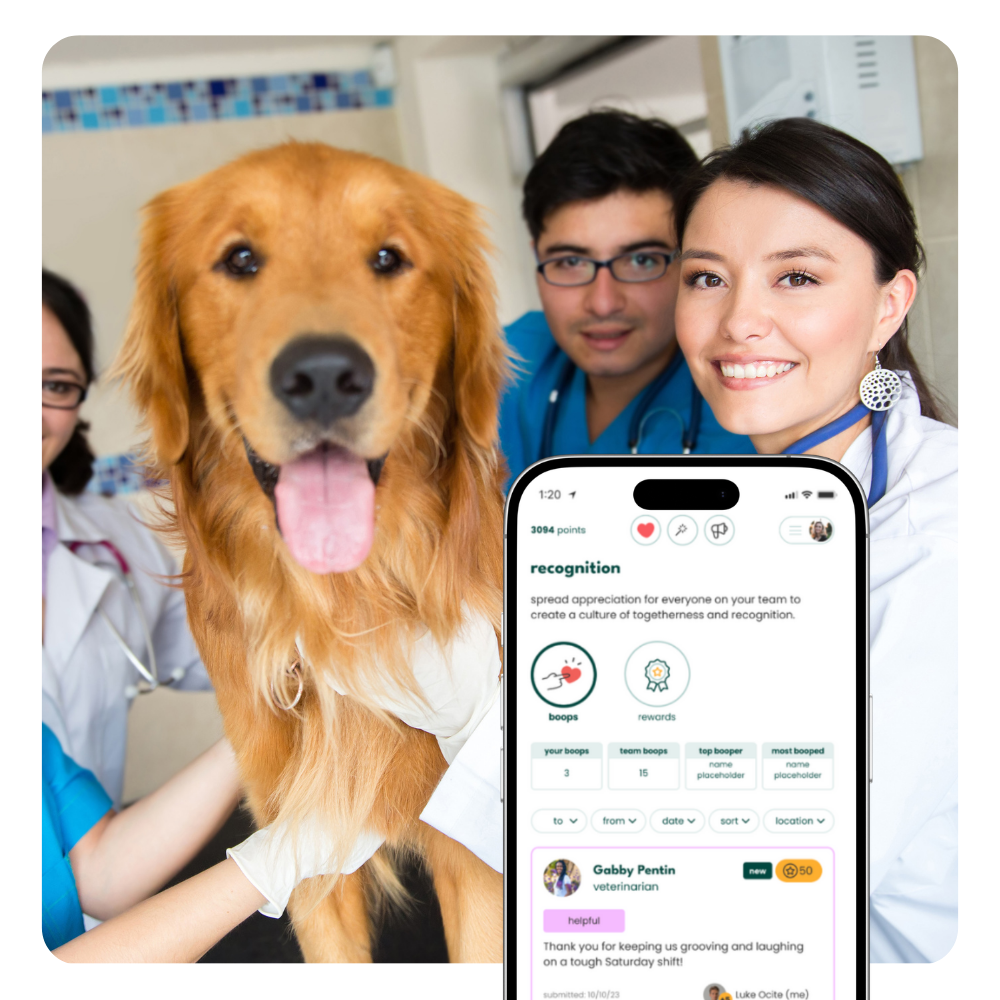
- Who gives it. Manager-only recognition caps out fast, because a practice manager cannot see what happened in the treatment area at 2 p.m. Peer-to-peer recognition scales because the witnesses are already there.
- How often. Pick a cadence per level and write it down. A program that fires only during Vet Tech Week is an event, not a program.
- What earns it. "Great job today" is not recognition, it is politeness. Recognition names the specific thing: the catch on a missed dose, the client who got talked down, the shift somebody covered on four hours' notice.
- What form it takes. Gallup's data show the most effective recognition is individualized to how each person wants to be recognized. Some people want it said out loud at the huddle. Some people would rather be handed something quietly.
- How you know it happened. If nobody can tell you who on the team has not been recognized in the last month, the program is running on assumption.
What the Program Looks Like on a Practice's Calendar
A working program is usually less elaborate than practices expect. The structure below is a starting skeleton, not a prescription.
| Cadence | Who gives it | What it recognizes | Typical form |
|---|---|---|---|
| Same shift | Anyone on the team | A specific save, catch, or last-minute cover | Peer note or points, sent that day |
| Weekly | Shift lead | One behavior tied to a stated practice value | Named out loud in the huddle |
| Monthly | Practice manager | A pattern of work, not a single moment | Tied to a reward the person chose |
| Quarterly | Owner or medical director | A development or competency milestone | A career conversation, not a gift card |
| Annually | The practice | Tenure and credential milestones | Public, specific, and dated |
The ideas that fill those slots are the easy part, and there are plenty of them in our roundup of meaningful ways to celebrate a veterinary team. The structure is what makes them survive a bad month, a short-staffed week, or a practice manager going on leave.
If your practice's recognition disappeared tomorrow, would anyone be able to tell you it had? A program built to answer that question is the only kind that holds up under the 23% turnover the profession is currently averaging.